Saturday, 30 November 2013

Task 16: Elements of game design, part seven: level design


In early days of video games, a single programmer would create the maps and layouts for a game, and a discipline or profession dedicated solely to level design did not exist. Early games often featured a level system of ascending difficulty as opposed to progression of story-line.
The first game genre that required significant amounts of time to design areas were text-based games, 1983's Lode Runner was one of the first titles to ship with a level editor, and its designer, Douglas Smith, reputedly paid neighbourhood children to design levels for the game.


Level design for each individual level in a modern game typically starts with concept art, sketches, renderings, and physical models. Once completed, these concepts transform into extensive documentation, environment modelling, and the placing of game specific entities.

But not only this, there are other factors like: What technology will be used for this project?, What kind of project will we be building with this technology? These are factors that need to be answered along side budgets and time scales. Taking a master deathmatch level designer and asking him to create sprawling landscapes for an Everquest style Massively Multiplayer Role-Playing Game would be a big mistake. Even if the designer were able to adapt and create great content then the time and overhead taken to train him in the new design and direction would not be worth the effort.

When designing a level, much like designing a concept, there must be an iterative process, the very first idea nine times out of ten will not be the best, changes must be made in the same way as altering clothing style, colour variances with level design, whiteboxing, concepting and overall ‘Gameflow’, the mystical "life force" that makes a good game fun and it is very much a reward-response system that challenges the gamer and then provides a "treat" for completing tasks.


Multiplayer gameflow varies quite a bit from Single Player gameflow; it is more about rationing risk and reward in a social environment. A Level Designer who is building for a Multiplayer-oriented title is much like a playground architect. He’s building the space where real people will be driving the game and experiencing the action firsthand, the gamers themselves largely dictate the gameflow. Designers also use placed elements like AI or using the story to prod the gamer along for similar results.


Another process in level design is to create a sense of freedom, to Let the player think he has a choice in where to go and what to do but gently guide him to his destination. However in reality it is controlled freedom and in level design this topic surrounded by much debate, if a player gets the freedom to go anywhere and do anything then they will rapidly get lost and frustrated. By utilizing the level design and creating a more linear experience it will give the illusion that there are multiple paths to choose which the player will then get the best of both worlds, the seemingly open world freedom he desires, however still feel like he made the decisions to get there.

One final part I want to mention on the topic would be sound.
Designers must work closely with sound technicians to assure a compelling and exciting audio experience. No matter how good the talent is, the monster that is in the gamer’s head is always scarier than what is seen onscreen. The sound for scenes can ultimately immerse the player within the generated world, great designers use this like a drug, using short sequences that match the moment, horror, war, peaceful etc. to really emphasize the scene and create a want to continue for the next ‘hit’.

All in all, level design is most certainly an iterative process of planning, construction and testing repeated over and over through each iteration until the end result is satisfactory.

External References From:


Task 15: Elements of game design, part six: visual composition

The term composition means 'putting together,' and can apply to any work of art, from music to writing to photography, that is arranged or put together using conscious thought. In the visual arts, composition is often used interchangeably with various terms such as design, form, visual ordering, or formal structure, depending on the context.

Composition of  piece, be it traditional, digital, 2D, 3D is vital for visual appeal and overall success of the said piece. The piece can fail drastically if grounded in sloppy or poorly thought out composition.
Things to consider when planning a composition:

Line.
Line is possibly the most basic element of visual composition. Strangely enough though, lines don't actually exist in nature. Lines serve many purposes in visual composition. They can divide the composition, they can direct the viewers eye, they can define shapes and they can make a statement to the feel or interpretation of the image by the viewer.
Vertical Lines
Vertical lines create a bold statement. They tend to suggest power with a strong foundation. They indicate a feeling of solidity.
Horizontal Lines
Horizontal lines indicate stability as well, but in a much more calming way. They suggest balance, harmony.
Diagonal Lines
Diagonal lines also create a strong feel, but indicate a sense of energy or motion. Mixing diagonal lines with vertical or horizontal lines can create a nice blend of power and dynamics.
Organic Lines
Organic lines often come from nature. The start to introduce feelings of chaos, complexity and beauty. Lines that suggest lightening have an angular quality and could seem intense. Lines in patterns like grass or wheat fields might suggest a sense of calming beauty.
Implied Lines


Implied lines are possibly the most interesting if used correctly. Implied lines in composition don't exist at all and are not even shown visually. They are created with directional elements such as shape, hand gesture, eye contact (or direction) etc. They are possibly the hardest elements to work with, but usually have the strongest impact when done well.
Examples:


Shape.
Shapes are defined by contrast of differing light or colour areas, they can be geometrical and or abstract. At their most obvious they tend to be object identification. A silhouette of a chair can be identified as a chair because its an object just about everyone can identify. Same with any other subject or shape of familiarity.
Cropping
Cropping can be done either with the entire composition, or by obstructing the subject by other elements of a composition. Cropping refers to the information you are willing to give the viewer.
Scale
Scale is important to draw attention or bring a sense of size to something that's not obvious.
Scale can also be created using perspective. Objects closer to the point of view are larger in scale than the same object far away and are treated as more important.
Focus
The use of focus or blur in art and photography allows the artist to draw attention and create a sense of importance about a particular focal point.
The amount at the discretion of the artist and can be use to give drastically different effects, a little bit of blur can create a sense of abstraction, nostalgia or even subconscious representation, while extreme blur can turn shapes into simply textures.
Lighting
Somewhat similar to focus, lighting can also bring emphasis to a subject that's brightly lit and less attention to subjects that are over and under lit. This effect can be similar to focus and blur but objects will retain their outline definition as long as they are separated from the background. 


Negative Space.
Negative Space is the technique of using elements of low impact to contrast your subject in a picture. Negative Space isn't always a flat colour, its a contrast to the high impact nature of the subject. This could be a flat colour, but could also be an area of low contrast, low texture, subtle gradient.

Rule of Thirds.
The Rule of Thirds is a common technique for achieving balance in your composition. If you subdivide your photo into thirds both vertically and again horizontally, you'll wind up with an evenly spaced grid. The sections where lines cross are points of interest. These points are where you want to place your subject, parts of the image where you want attention to be drawn or show points of activity. Rarely will you use all four points - many times one or two - but this is what creates balance in your composition.


Sub Framing.
Sub framing is simply taking an object or subject in your image and framing it with lines within the composition, thus having a picture in a picture and giving emphasis to something in the composition.
Mastery of all these elements and implication of them in works far surpass the end product of random chance, it will be one of an iterative process of conscious decisions made to control the viewer to see the composition, unconsciously as the artist intended.


The research stage of this post has really opened my eyes on this topic, it has really been a learning experience with quite a number of web pages saved to revisit. The ideas brought forth In various techniques to almost modularise -in a way- your work so that it is repeatedly visually appealing from a stand point of almost mathematic like decisions.
This also lessens the daunting cloud around planning large and or complex painting for me, the idea of completing a process like one of these really boost my confidence.

External References:

Thursday, 28 November 2013

Another Update!


I know what your thinking, it must be a blue moon for me to actually post twice in one week, I said I was getting back into this and that’s actually what I’m going to do.

Right, the new project is the self portrait, mortal engines project which is a 3D project in conjunction with visual design for the preliminary stages planning and concept ideas and overall creation of the character design. The character needs to be a self portrait style and should be themed through Philip Reeve’s science fiction novel ‘Mortal Engines’ as is suggested in the title.

Starting this project was a bit of a second priority at the time around 2 weeks ago because of the Blitz building and Vehicle projects and I am annoyed to say that all I managed to get done were some Pinterest boards and simple silhouettes, which have now been completely scrapped and redone:

The current standing on the project is a fleshed out concept of a Navigator character, which is in the middle:


The two concept to the left and right represent different styles I was looking at, at the time, of which I then combined along with one of my original ideas of the simple waist coat and shirt combination to give an smart, classy feel.


I really wanted to get a hood incorporated into the design, although I suspect I will curse this decision later down the pipeline when I try to rig the character.


More updates and blog tasks on the horizon.

Tuesday, 26 November 2013

Presentation ‘Dragon’s Den’ review


Now time has past after the dragons den style presentation pitch for the land air and sea vehicle project I’ve had time to reflect on the  outcome, the overall experience and how it all went.

Overall it was a good learning experience, being able to pitch ideas with the added incentive of a investment, even though that may of only be a few pieces of chocolate haha.  And personally I thought it was a fantastic idea and hope it is implemented in the future again and again for all years, it really gives an insight into the presentational style and professionalism that will be required in industry and gives everyone a good head start to work on this.

Now for my presentation. Now every time I do any sort of public speaking I feel racked with nerves and it shows during the presentation, but this time, although the nerves were still there, with the previous practice of last year they were reduced and during the presentation and I was told by my peers that it did not appear rushed and was a very calm and well thought out presentation. Although I still forgot to mention parts like usual, especially one part, being very important, which was the design and functions of the cockpit and the two pilot control system used where one pilot would be in charge of the land version of the design using standard steering wheel design and the other would control the sea and air versions using a joystick design.

Another idea I thought was very beneficial although added to my nerves was the fact that we presented in front of not just the tutors ‘dragons’ but the entire year group, this gave ability to view and critic other peoples presentations as well as seeing a wide variety of different designs and approaches to the project so that we can take the best of everyone's ideas to add to future presentations.


So in conclusion, my review of the presentations as a whole, the idea is a fantastic one and should be regularly implemented in the future not just for added practice for pitching, but to be able to see broader ranges of ideas and to see what you could improve on so that we can be more prepared for  industry.

Various Stills from my presentation:


Sunday, 17 November 2013

Back on form!

Time to get back on top of blogging, I’ve just finished the Blitz environment project last week:


I am quite happy with the end result, my only qualms would be the fact I didn’t take full advantage of the tri and texture budgets, as they were free rein but to stay within similar range to match the two building supplied by Blitz game studios and I was waaay under those average budgets.

 And the land, air, sea vehicle concept deadline if fast approaching. But I would like to take a quick breather and get back into this and I’ll start with an update on my work at the moment:


I have restarted the project due to practicality of the first design and am very proud to say that –after a lengthy discussion with my engineer friend- that within the next decade as per the brief, the concept is totally viable taking advantage of DMLS technology, oh yeah and money not being an issue, haha.

The design is powered by an MMRTG with plutonium-238 dioxide as its nuclear fuel, this will power the cockpit and the pressurization at depth as well as the wheels.

The wheels are not your ordinary wheels, to have the 4 part wheel/ prop/ propeller system they needed to be designed differently.
The tyres are a thick rubber belt with treads with an internal 3D metal printed belt with teeth that protrude out of the underside and lock into slots on the prop/ propeller housing. The final part is a high powered electrical motor that is clamped to part of the rubber belt and forces the wheel to move in turn.

MMRTG:
http://solarsystem.nasa.gov/rps/rtg.cfm
DMLS:
http://en.wikipedia.org/wiki/Direct_metal_laser_sintering

Wednesday, 30 October 2013

Elements Of Game Design, Part Five: Planning and Concepting:

'Your most powerful creative tool is an organised brain allied to a healthy work ethic.
Professional game development lives and dies by effective organisation. In other
words, planning and concepting are essential to achieve successful outcomes. The
ability to demonstrate that you can generate ideas and see them through to a
successful conclusion within a fixed set of constraints and in a short period of time, is
a key professional skill you should develop.'

To begin with I agree with the initial statement that certainly the most powerful creative tool is an organised brain allied with a healthy work ethic.
Without these key areas your productivity and workflow simply fall to pieces.
The very game pipeline varied as it may be from company to company depending on desired outcome, will still always have areas and time allocated for planning and concepting. To ignore these fundamental tasks would spell chaos further down the line, imagine getting to a stage of final development and optimization tweaks and then realizing you do not have a coherent story, or rubbish game mechanics because you did not plan for it in the beginning.

Another key aspect that is mentioned is the ability to demonstrate that you can generate ideas and see them through to a successful conclusion within a fixed set of constraints and in a short period of time.
One good quote by Jeff Bezos mentioned in an article linked at the bottom from gamedev.tutsplus.com states: ‘I think frugality drives innovation, just like other constraints do. One of the only ways to get out of a tight box is to invent your way out’.
This really emphasises the creativity needed within the game industry to be able to solve problems that come forth. The writer then goes on to say how time constraints are paramount stimulating creative thinking and without them, or where more freedom has been allowed it has ultimately ended up discouraging this and limiting new ways of solving problems.
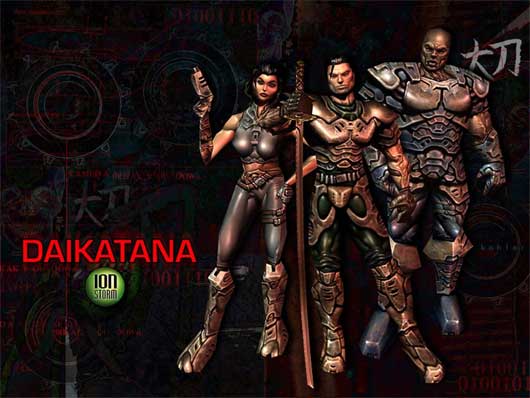
A prime example of this being mentioned as well in the form of the game Daikatana:


Daikatana was a game created by John Romero, one of the co-founders of id Software (creators of the Wolfenstein, Doom and Quake series). In 1997 Romero enjoyed fame and fortune and decided it was time to make his dream game come true. He designed the game with great amounts of content in mind, more than 20 levels and plenty of weapons and monsters, with no limitations in budget, team or time. Initially he planned only seven months of development – but following multiple reschedules, changes in game engine technologies and code rewrites, the game ended up being released after three years.’ This proving that without the constant pressure of deadlines and constraints not to mention proper planning and concepting there is no chance of meeting desired goals or solving problems quickly and creatively, effectively overall there is no drive to keep going, and there is no structure to the work.

Yet another example is mentioned, this time in the form of Duke Nukem Forever:

After gaining success of Duke Nukem 3D in the 90s, its creator George Broussard was ready to make a sequel called Duke Nukem Forever. However after Initially announced in April 1997, the game was expected to release a year later, but constant changes in game engine technology made Broussard change his mind multiple times while trying to develop the best looking game he could. Duke Nukem Forever ended up being released 15 years later, in 2011.


In conclusion I will say again that I agree with the statement, the game industry works off an organised, structure pipeline that needs to be adhered to in order to achieve marketable results. Tools like healthy work ethic and organised minds combined with workable time constraints are a tried and tested method for success and are essential for the aspiring game artist, programmer, director, or, hell anyone that intends to work in the industry.
External References:
Gamedev.tuts article:
Wired, downfall of Duke Nukem article:

Saturday, 5 October 2013

Year 2: The return.

During the months I have had off from uni I've had time to reflect on the year and re evaluate my goals and aspirations.
However they have more or less stayed very consistent over the summer, I am still confident that I would like to pursue a 3D role, focusing, if possible in environment design. The reasoning behind this lies in the months I've had off, namely the games I had chance to play, titles like Fallout: New Vegas:

 Assassins creed 3:

 and the Bureau: XCOM declassified:

 really stood out to me the beautiful environments really make or break the player’s immersion in a game and make the overall experience more or less enjoyable as a result.

On top of this another contributing factor towards this decision is the way that environments are made in relation to other elements like characters. I came to this through the last project from the first year, being the UDK level creation, I really enjoyed the way that environments can be split up into many upon many of smaller projects that decorate the surroundings, I populated the level with different foliage and topology changes as well as a water piece to make the environment more entertaining to explore. As oppose to one daunting task of a whole character creation.

Now I understand the fact that I cannot simply pick one area I like and then disregard everything else,

 given the current standing of the industry I need to be capable of anything that is required, however I also know that so long I can provide these skills I can specialize in a certain area which I would like to be environment design.
My ambitions for this year are to be much more productive with the time allotted for projects, use the time not just to complete the work on time, but to complete, then re complete it with the knowledge I have gained to produce a higher standard each time. This will be a big shock from last year, however I am determined to get into this mind set and stick with it.

I would also like to spend a LOT more time in the labs as I realized I need to remove myself from distractions in order to achieve my set out goals and I believe if I can do this now it will set a very positive work ethic and ground work for the future.
One final note would be that I am looking forward to furthering my skills, especially in 3D and gaining some freedom although daunting it seems in being required to look at your work and reflect upon it and improve before handing it in, but I’m sure if I apply the above I can overcome and succeed in this too.


Well, there are the ideas and ambitions for this year, now i need to put my money where my mouth is..

External References:
Assassin's Creed 3 The Frontier Map IGN:
Fallout: New Vegas screenshots:
The Bureau: XCOM Declassified developer blog: